Can development, properly practiced, do for a region what good farming does for its soil?
Pre-industrial-scale farming in Wisconsin worked regeneratively. Cows ate from the fields and the fields were nourished by the cows. Barns were built of nearby timber and raised with neighbors. At the center of community life was the parish church. On Sundays, people were reminded that the land and the life on it were a sacred gift to be tended.
Every wholeness sits inside a larger one. Wisconsin farmland had been kept for thousands of years by people who were removed from it to make room for Europeans. They are still here. Though whole in its own way, the farming was a wound in something larger.
Wendell Berry called soil “the great connector of lives, the source and destination of all.”
The larger whole is older than the farm and older than the people who came before. It is still here.
A generation left farms for the city, for progress, and built the world we live in now. That world is mostly built of materials, energy, and money from someplace else, with buildings and people disconnected from the land on which they stand. It cannot continue this way.
A well-run farm builds richer soil every year. Threshold seeks to develop the same way, from the region’s forests, fields, and people, with each project leaving the whole richer and more alive.
Fifty years of repairing community
Joe Krupp grew up on one of those farms, in a parish gathered around St. Anne’s church. In 1968 he went to the University of Wisconsin seeking opportunity. He studied social work, and a summer job in construction kept him in Madison.
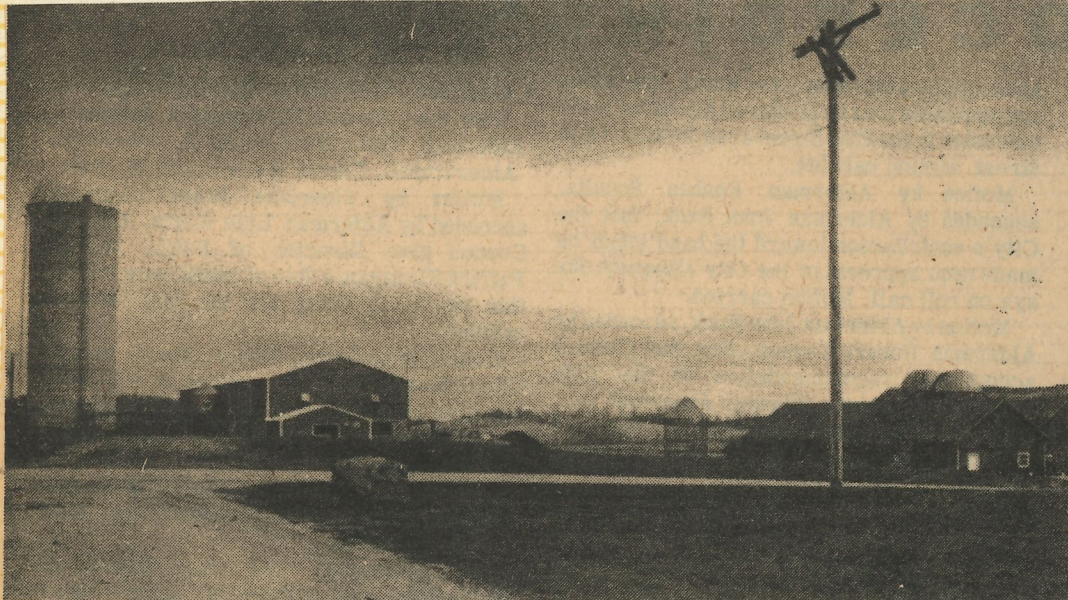
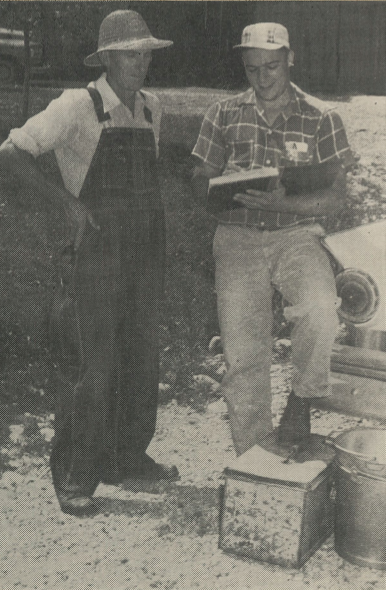
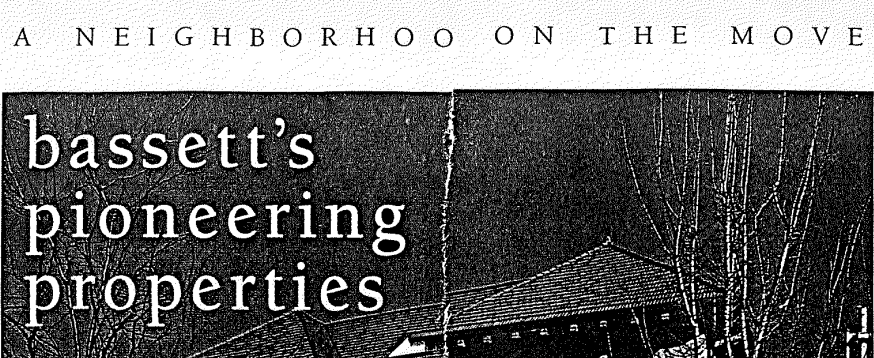
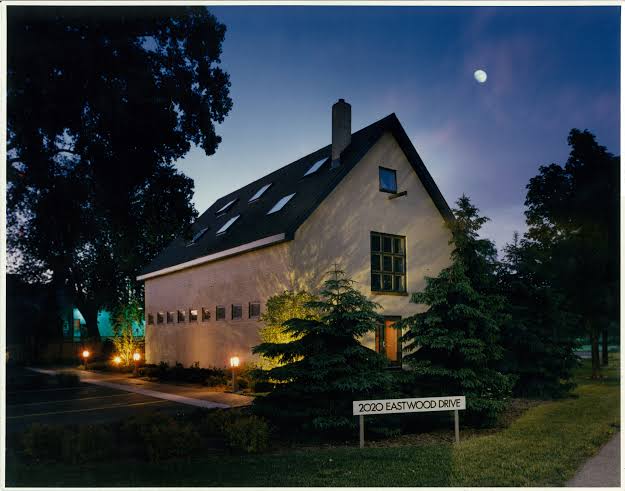
Joe saw Madison’s old neighborhoods needed repair. He spent the next fifty years repairing them, one building at a time. An architect drew the building, his crew built it, and a bank financed it. Joe revived the neighborhoods of Schenk-Atwood, Bassett, and First Settlement, running Krupp Construction from the Kennedy dairy barn.


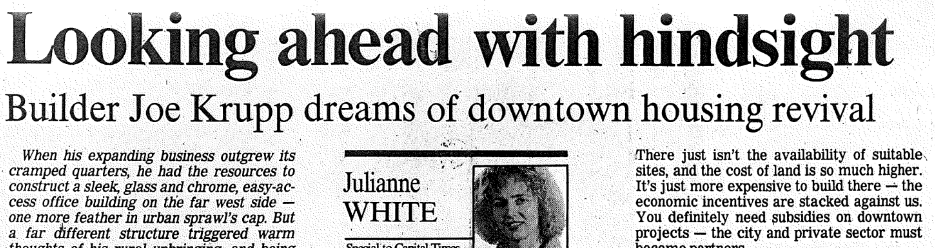
Threshold is still based in that barn.
Housing is being built on failing assumptions
People will still need housing in fifty years, but most of what is being built today will not serve them well because it rests on assumptions that are giving way. These assumptions include endless growth, cheap energy, a steady climate, solid institutions, and homes built for people who don’t need their neighbors. These assumptions are failing together for reasons that run deeper than real estate.
Infinite growth on a finite planet breaks the planet.
Most housing is built as if the planet is not finite. A loan is a bet that more will be available to pay it back when the loan comes due. But what if more can’t be taken out of the world? The earth has limits based in physics, chemistry, and biology. We are crossing many of these boundaries and on the other side of them, our assumptions about stability and carrying capacity begin to break. Housing, as practiced, is one of the largest places where bets about our future are made real and tangible.
Delivering returns that strengthen the foundation
Joe’s son, Tyler, was born and raised in Madison. He left for Yale, then to teach philosophy at U.C. Berkeley, then to San Francisco, where he founded Zazen, an interfaith wellness center. There he began to see the interrelated nature of the challenges facing humanity, and the role housing and construction play in them. In 2019 he and his wife Sofia returned to Madison to create Threshold Development with Joe and learn how to build regeneratively.
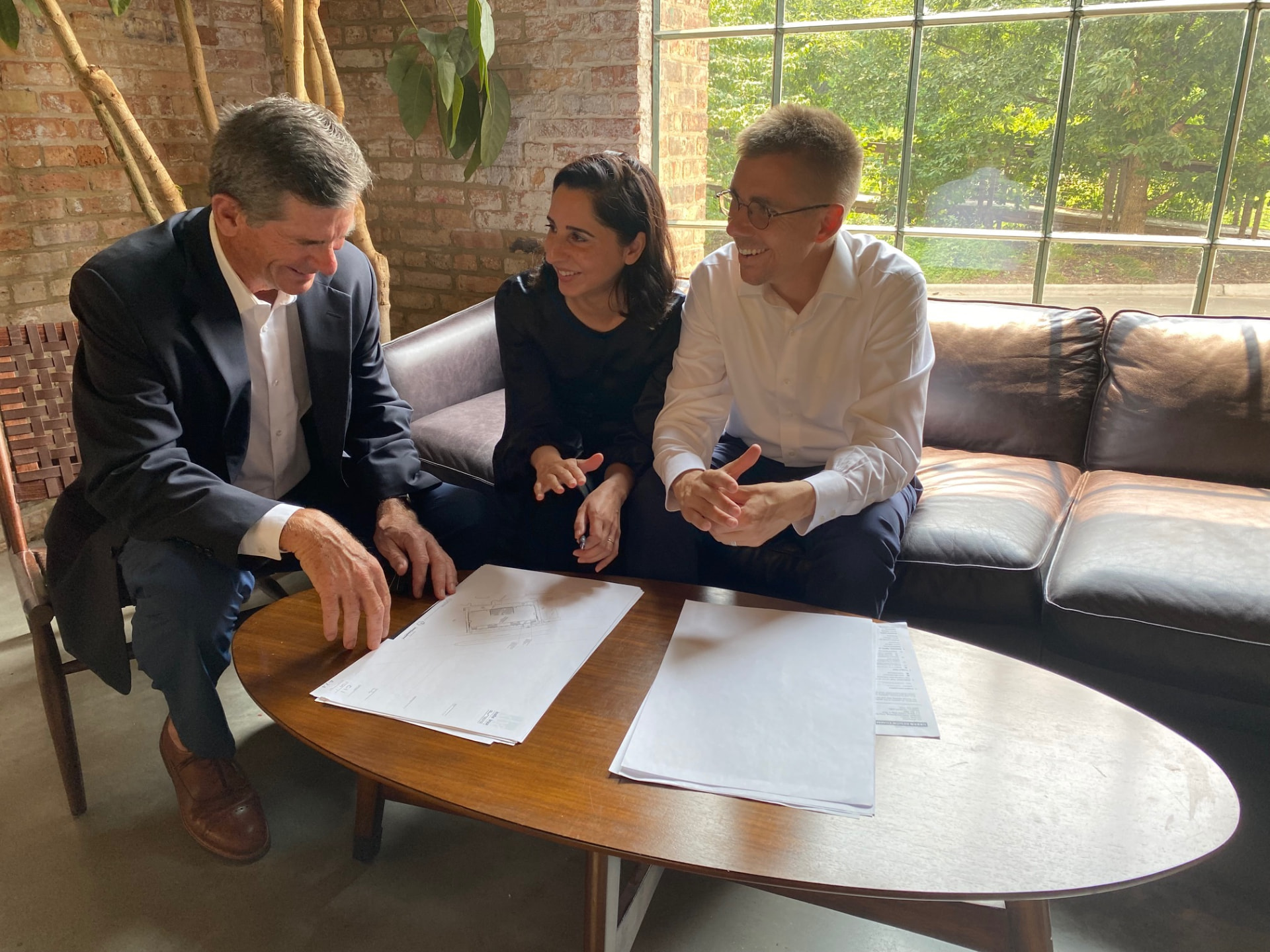
Today Tyler teaches in the University of Wisconsin’s real estate program. He tells his students that almost every return in conventional real estate is degenerative. A degenerative return borrows against everything it depends on. A regenerative return builds the health of everything it depends on, including the capital invested, the land, the materials, and the people who live and work inside the structures. Wealth that only extracts is a recent invention. For most of history, wealth was used to keep good things going – to build health and stability where one lived. That time has necessarily come again.
Aligning incentives makes significant change possible
Tyler took up his father’s work and set out to deliver a regenerative return, which requires not just doing development differently, but innovating at every step of the process. He realized he could not do this beholden to companies driven by different incentives. So Threshold Development seeded aligned partners: Threshold Builds to design and construct, Threshold Equity to finance, Threshold Sacred to work with congregations and their land, and now Threshold Communities to care for the community inside the buildings. As other industries have shown, this kind of vertical integration is often what makes significant change possible.
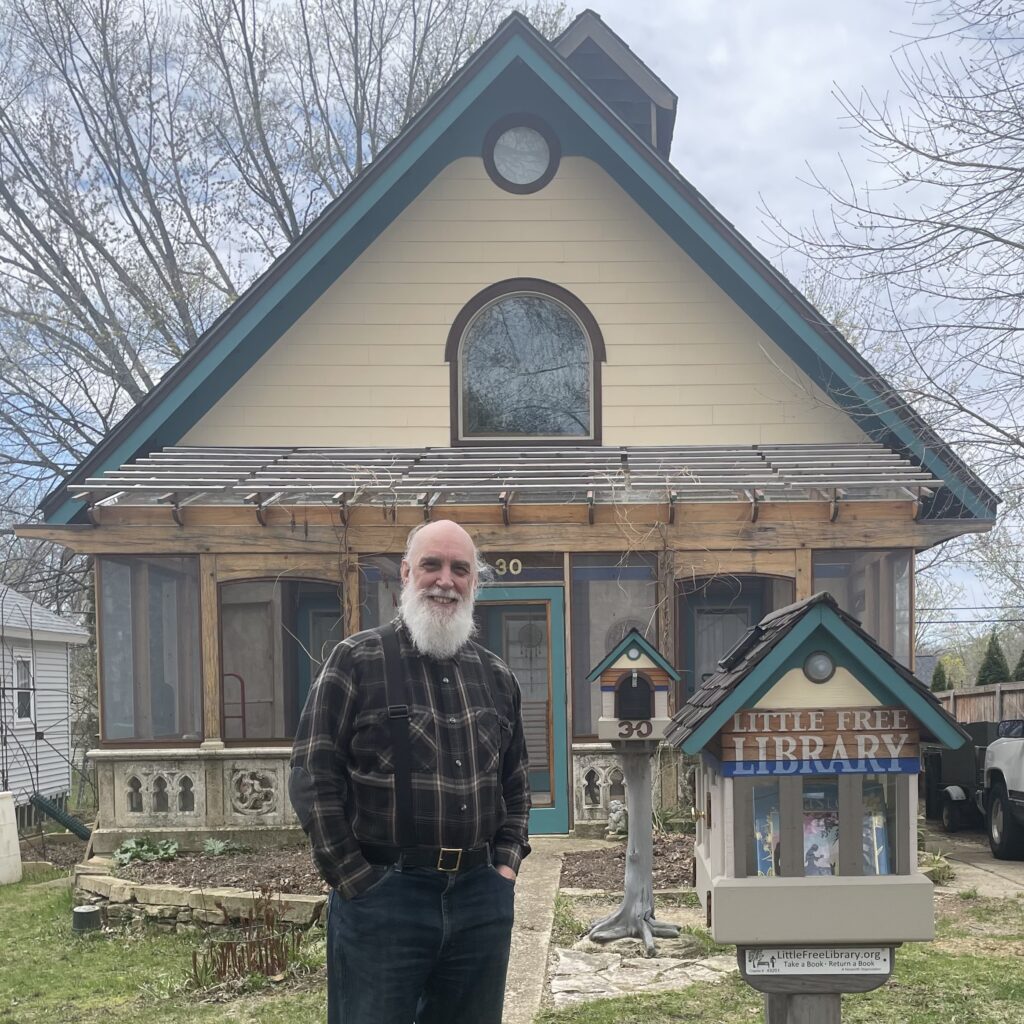
Tyler started Threshold Builds with Jake DeHaven, an architect who had turned a Norwegian lodge and a 1930s gospel tabernacle into community venues, and Sean Size, a builder of thirty years with a habit of asking why a thing is done the way it is done. Sofia Krupp Qureshi leads interior design and focuses on how a Threshold building feels once you’re inside it. Builds is a studio where architects, engineers, builders and designers solve projects together.
Builds persuaded two architectural elders to join the studio. Ed Linville has drawn houses and public places in Madison since 1974, some of them for Joe’s crews. Lou Host-Jablonski has spent fifty years on community architecture, bio-based materials, and cohousing. In 2018 a Madison gallery asked Ed and Lou to imagine the city seventy-five years out. Now they are building it with a new generation.
The first test was 252 Dunning: 32 apartments, Passive House certified, and zero debt. Next came Eastmorland, where two congregations came together and brought in Threshold to turn a failing church building into twenty-four apartments for working families and a community center. More projects are underway. They use materials from closer to home: timber from the Menominee forest and wall panels made from crops grown on nearby farms.
Finding partners who already live this way
Sharing risk instead of lending at interest, and holding land in trust for future generations, are practices older than the mortgage. Threshold needed partners who already lived by these practices. That is how a former philosophy professor came to have a Presbyterian minister and an expert on Islamic finance as partners in a real estate company.
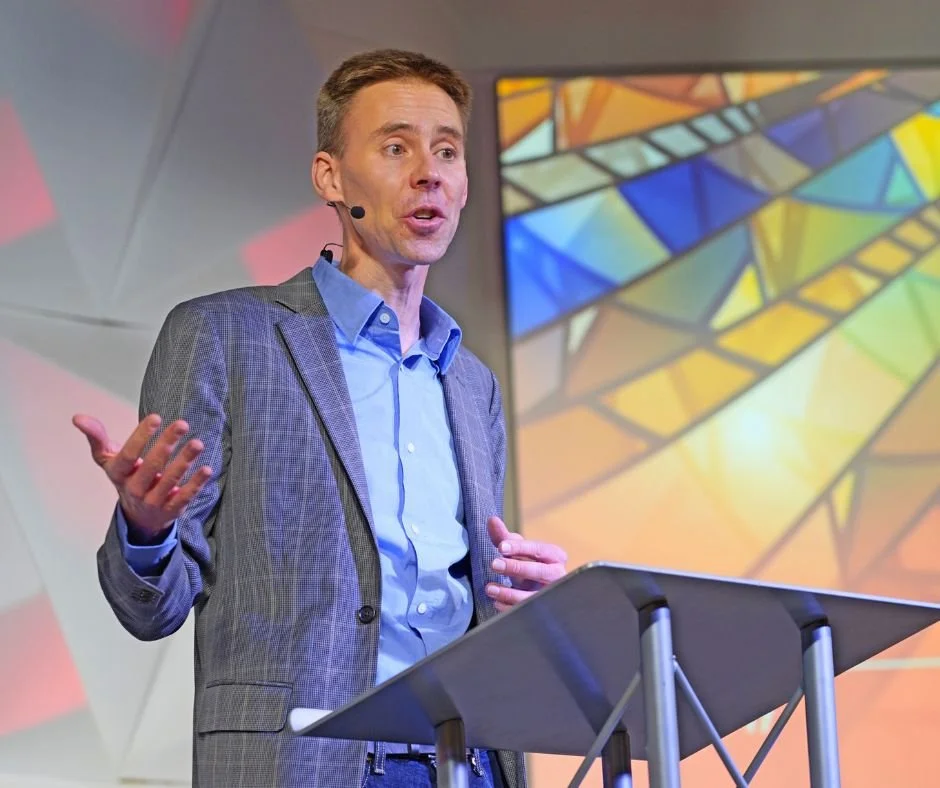
Mark Elsdon was called to Pres House, a church in the middle of the University of Wisconsin campus. In response to a flagging congregation and poor finances, he built student apartments on the parking lot behind the church. Rents from the apartments have supported the popular ministry ever since. Congregations across the country seek Mark’s advice on development and re-use, and he has brought that work to Threshold Sacred.
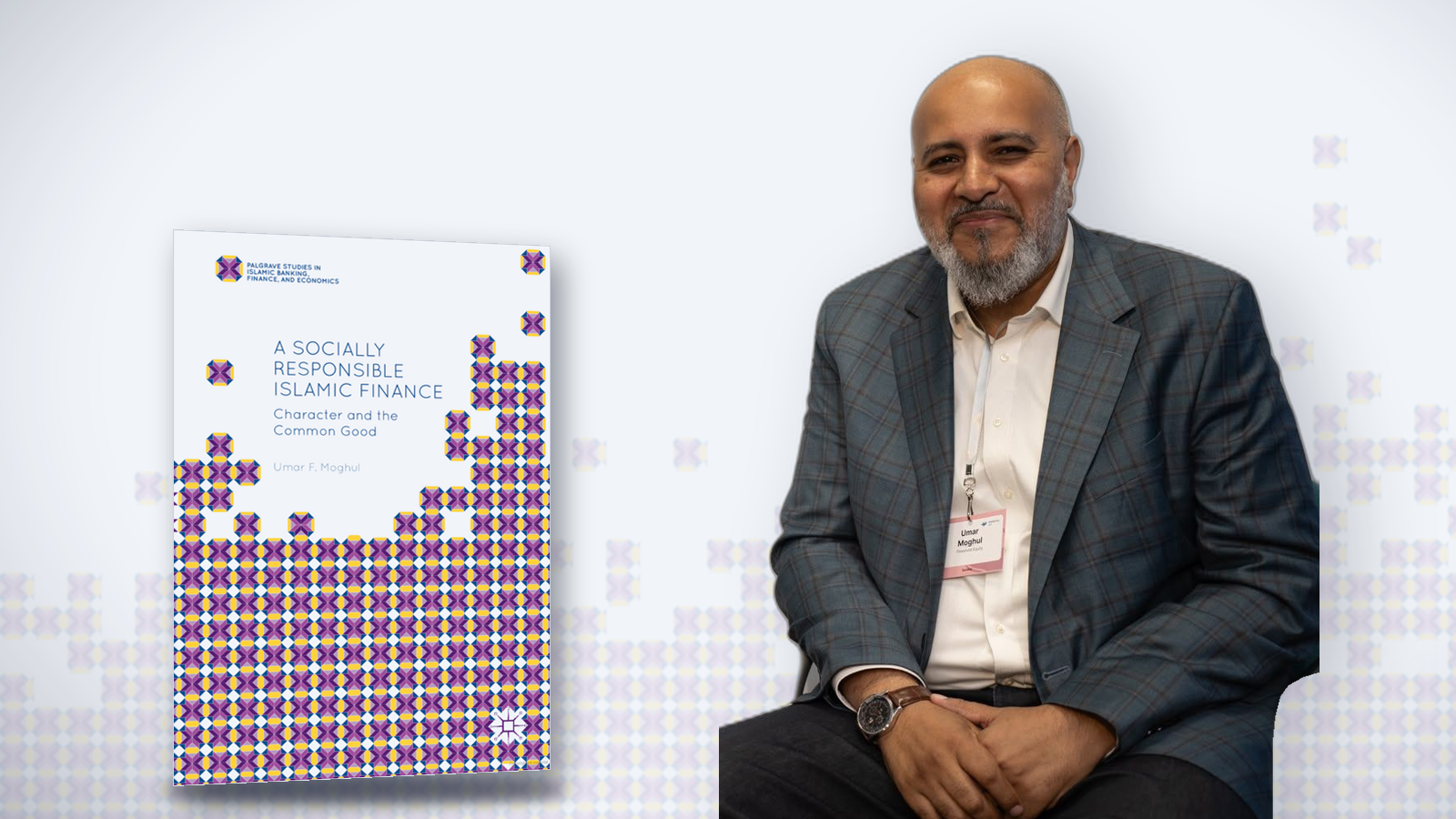
Umar Moghul is a lawyer who structures investments to the standards of Islamic finance, where money earns no interest and the risk is shared. He and Tyler designed Threshold Equity together. Through it, Threshold reaches investors who already believe real estate should be financed this way but have few places to do so.
Threshold Communities was created to grow community in our buildings. Communities works inside each project to turn tenants into neighbors. Eastmorland shows what is possible. For seventy years a church shared its building with Scouts, a food pantry, theater groups, Al-Anon. The roof leaked, the basement flooded, but the groups kept coming. Working with the congregation, Threshold delivered a building made for them. Families moving into the new apartments on the shared land will have those groups as neighbors from day one. That is the belonging Communities intends to build into every project.
A building sits on land, is made of materials, is paid for with money, and is at the center of people’s lives. Our practices bring together Sacred for the land and relationships, Builds for the materials and design, Equity for the money, Communities to serve the people who live there. Development starts each project and harmonizes the four practices so that no decision is made without regard for the whole. Five companies operate as one so that each project is more regenerative than the last.
From repairing neighborhoods to regenerating regions
A single building can change a block. Enough of them can change a region. Each project takes from the region around it, and regenerative projects leave a region with more materials, skills, capital and trust. A region’s trust includes the people who tended the land first. We call this work catalyzing bioregional regenerative economies and culture.
Threshold is designed to cover the entire development lifecycle and draw on local resources at each step. At scale, Threshold can direct a hundred million dollars a year of materials and skilled work to local forests, farms, and trades. This is what jumpstarts regenerative economies.
Do you see the opportunity we see?
The structure is in place and working in Madison. Our partners are at work in other regions. The ingredients are everywhere: congregations with land, forests and farms within reach, local artisans who want to be proud of what they build. What stands between Madison and the next region is resources. That is the work we are inviting you into.
Regenerative development can do for a region what regenerative farming does for the soil.
Come home to the living world. Come, build with us.
To learn more…
- About our ethics (coming soon)
- About the metacrisis (coming soon)
- About regenerative development (coming soon)
- About our regions and partners